


Pereiti prie turinio
ieškoti
Abstrakti 3D forma su minkštomis kreivėmis, susiliejančiomis mėlynos ir oranžinės spalvų atspalviais gradientiniame fone. Kairėje pusėje matomas žodis „IMAGINED“ su šviesos spindulius primenančiu projekto IMAGINE logotipu.

The IMAGINE Project – Insights for Modeling Achievement Goals IN asynchronous virtual learning Environments

The IMAGINE project examines how elements of asynchronous virtual learning environments relate to students’ motivation, engagement, and learning progress. The project is based on achievement goal theory and aims to identify which aspects of virtual environments foster adaptive motivation and support the development of more effective digital learning solutions.

About project

“Insights for Modeling Achievement Goals IN asynchronous virtual learning Environments” (IMAGINE) – an educational research project aimed at examining how elements of asynchronous virtual learning environments relate to learners’ motivation, engagement, and learning progress, as well as identifying the factors within such environments that are conducive to learning.

Traditional theories of learning motivation cannot always be directly applied to virtual contexts, so it is important to evaluate them in online settings. Based on the achievement goal theory, this project will assess how elements of asynchronous virtual learning environments and task presentation are linked to learners’ motivation, engagement, and learning outcomes. The experimental phase will explore how specific aspects of the learning environment shape learners’ goals, while the longitudinal study will help identify adaptive and maladaptive aspects of virtual learning dynamics. The findings will be used to develop methodological and analytical tools for teachers working with asynchronous virtual learning platforms. This project will contribute to the improvement of distance education and to the evolving role of teachers in a technology-based education system.

Project implementation period: 2025-04-01 – 2028-04-03

Project funding:
The project is implemented within the framework of the progress measure No 12-003-03-06-01 “Putting the Teacher First” of the Education Development Programme of the Lithuanian Ministry of Education, Science and Sport, which is the manager of the development programme for the period 2021-2030. The project is funded by the European Union Funds for the period 2021-2027 and the State Budget of the Republic of Lithuania.


Team

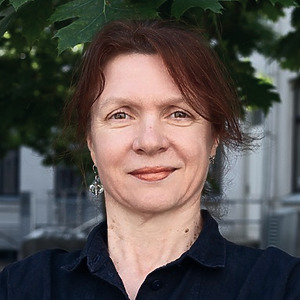
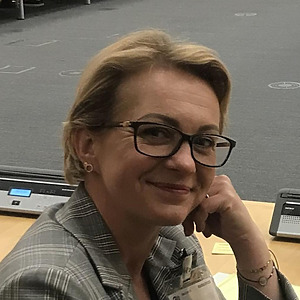
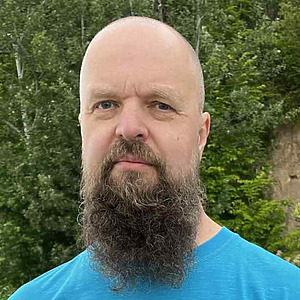
The IMAGINE project is implemented by researchers from the Faculty of Social Sciences, Humanities and Arts at Kaunas University of Technology.

Results

The main outcomes of the project – scientific publications, international conferences, organized events, and internships – demonstrate intensive knowledge dissemination and the project’s significant contribution to educational research.

October 3, 2025 – an online lecture “Big Data in Educational Research” was held, delivered by Prof. Dr. Lisa Bardach (University of Giessen, Germany; Kaunas University of Technology, Lithuania). The lecture was attended by 40 representatives from Lithuanian higher education and other institutions.

The online lecture was aimed at doctoral students and other researchers in the field of educational sciences. It discussed how big data can transform educational research practices, open new research directions, and support evidence-based improvements in teaching practice, while addressing issues of data quality, ethics, and meaningful interpretation.

During the lecture, research examples were presented that used:
a) data from intelligent mathematics learning systems – analyzing millions of tasks completed by hundreds of thousands of students to better understand factors of engagement and long-term learning;
b) behavioral tracking data, helping to reveal learners’ curiosity and information-seeking behavior.

Finally, the results of a machine learning study analyzing social inequality in education were discussed.

After the lecture, Prof. Dr. Lisa Bardach also provided consultations to two doctoral students in educational sciences.

Partners

The project is implemented in collaboration with the partner Elicėjus – an innovative mathematics learning platform developed by the EdTech startup BBright. It helps students from grades 5 to 12 learn effectively, identify knowledge gaps, and fill them using structured, adaptive content. The platform offers over 600 lessons, 1,000 videos, and 8,000 regenerable tasks tailored to individual learning needs. “Elicėjus” enables independent learning and helps each student unlock their potential.

Contacts

Faculty of Social Sciences, Arts and Humanities
A. Mickevičiaus St. 37, Kaunas
I Chamber
email imagine@ktu.lt

KTU SHMMF projektas IMAGINE finansuotas Europos Sąjungos, Lietuvos mokslo tarybos bei kaip EDU projektas.